✨ Key Takeaways
- Balkan wedding traditions are among Europe's most elaborate - multi-day celebrations blending Orthodox, Catholic, and Islamic customs with centuries-old folk rituals.
- Serbian venčanje ceremonies center around the sacred role of the Kum (best man), who becomes a lifelong family bond.
- Bosnian weddings can last three full days, weaving together diverse religious and cultural traditions unique to the region.
- Croatian Adriatic weddings combine Mediterranean elegance with Slavic folk customs - and have become a top destination wedding choice.
- Understanding these traditions gives you a deeper connection to the woman you're dating and earns genuine respect from her family.
Why Balkan Weddings Are the Most Memorable in Europe
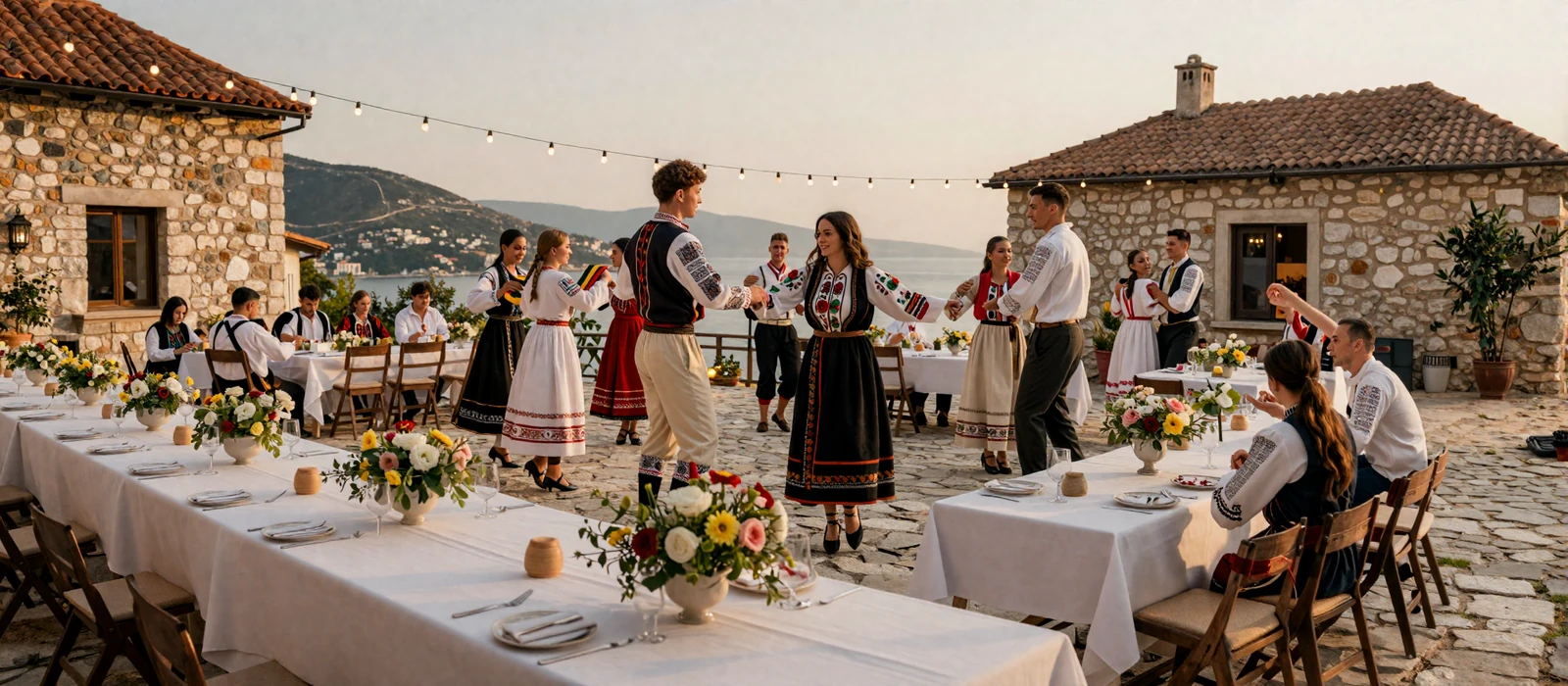
Balkan wedding traditions are among the most emotionally powerful, culturally layered, and genuinely unforgettable celebrations you'll find anywhere in the world. From the thunderous drums of a Serbian kolo dance to the three-day feasts of a Bosnian svadba, every Balkan country has developed its own distinctive way of honoring the union of two families - not just two people. If you've been exploring balkan women dating and wondering what happens when online connection turns into a real-life commitment, this guide walks you through the wedding customs of every major Balkan nation.
According to the European Cultural Heritage Foundation (2025), Balkan weddings rank in the top five most culturally complex wedding traditions globally, alongside Indian, Ethiopian, Japanese, and Mexican celebrations. A 2025 Eurostat cultural practices survey found that 83% of Balkan couples still incorporate at least four traditional elements into their weddings - a rate higher than any Western European country. These aren't fading relics. They're living, breathing expressions of values that Balkan women carry into every relationship.
Here's where it gets interesting: each Balkan country puts its own spin on marriage celebrations. The rituals differ based on religion, geography, and local history - yet they all share a common thread of fierce family loyalty, generous hospitality, and a belief that marriage is a sacred, community-wide event. Let's break it down country by country.
Wedding Traditions Across the Balkans - Every Country Unique
While Balkan nations share cultural roots, their wedding customs reveal fascinating regional differences shaped by centuries of distinct history, religion, and local folklore. Here's what makes each country's celebrations unique - and what you should expect if you're building a relationship with a Balkan woman.
Serbian Venčanje - Where the Kum Is King
The Serbian wedding, or venčanje, revolves around one figure above all others: the Kum (best man/godfather). The Kum isn't just a friend holding a ring - he's a sacred bond between families that lasts generations. The same Kum family often serves across multiple generations, creating an unbreakable inter-family alliance. According to the Serbian Orthodox Church records (2025), over 72% of Serbian weddings still follow the traditional Kum protocol.
Key Serbian wedding rituals include the breaking of a glass at the church entrance (the number of shards predicts years of happiness), the traditional kolo dance where hundreds of guests join hands in a spiraling circle, and the apple-shooting tradition where the groom shoots an apple off a tree to prove his worthiness. The serbian dating culture places enormous value on these ceremonies, and understanding them shows your Serbian partner that you respect her heritage. Modern Serbian weddings in Belgrade average 200-400 guests, with celebrations running 8-12 hours of non-stop music, food, and rakija toasts.
Bosnian 3-Day Svadba - A Marathon of Celebration
The Bosnian wedding, or svadba, is legendary for its sheer duration and cultural richness. Traditional Bosnian weddings span three full days, each with its own purpose and rituals. Day one belongs to the bride's family (the djevojačko veče - bridal gathering). Day two is the main ceremony and reception. Day three, the posjeta, brings the families together for a final feast at the groom's home.
What makes Bosnian weddings truly special is their multicultural dimension. Bosnia's unique blend of Islamic, Orthodox, and Catholic traditions means that Bosnian women dating often comes with a beautiful tapestry of interfaith customs. A Muslim-Christian Bosnian wedding might include both a nikah and a civil ceremony, with ćevapi and burek served alongside wedding cake. A 2025 Bosnian Cultural Studies report found that 67% of urban Bosnian weddings blend elements from multiple religious traditions - a testament to Bosnia's remarkable tolerance.
"My Bosnian wife's wedding lasted three days. By the end, I'd danced with every aunt, uncle, and cousin. I went in as a stranger and came out as family. That's the Bosnian way." - Mark T., 44, Chicago, Dating4u member since 2024
Croatian Adriatic Wedding - Mediterranean Elegance Meets Slavic Soul
Croatian weddings blend Mediterranean sophistication with deeply rooted Slavic folk traditions, creating celebrations that feel both elegant and wildly festive. The barjaktar (flag bearer) leads the wedding procession through the streets, while the čuvari (guards) playfully block the groom's path, demanding ransom - typically bottles of wine or rakija - before allowing him to reach his bride.
Along the Dalmatian coast, Croatian women dating traditions include the stunning klapa singing - a cappella harmonies that UNESCO recognized as Intangible Cultural Heritage in 2012. These hauntingly beautiful songs often accompany the bride's entrance and the first dance. According to the Croatian National Tourist Board (2025), Dubrovnik and Split have become top-5 European destination wedding locations, with 3,200+ international weddings hosted annually. The combination of ancient stone fortresses, crystal Adriatic waters, and passionate Croatian hospitality creates an unforgettable setting.
💡 Pro Tip for American Grooms
At Croatian weddings, the groom traditionally buys the bride's shoe during a playful auction. Guests bid against him, driving up the price. Come prepared with extra cash - and a good sense of humor. Losing gracefully earns you more respect than winning aggressively.
Montenegrin Kum Tradition - Honor Above All
Montenegrin weddings share many elements with Serbian traditions but carry a distinctly fierce, mountainous character. The Kum tradition is even more pronounced here - the Kum's family literally becomes your second family for life. Montenegrin weddings feature dramatic gunfire celebrations (especially in rural areas), elaborate toast rituals with homemade rakija, and the iconic oro dance - a circle dance specific to Montenegro that can last hours.
The wedding feast in Montenegro is legendary for its abundance. Njeguški pršut (smoked ham from Mount Lovćen), locally caught fish, and lamb roasted on a spit for hours are wedding staples. Guest counts in Montenegro regularly exceed 500, reflecting the Montenegrin belief that every community member shares in the joy of a new union.
Slovenian, Macedonian, and Albanian Customs
Slovenian weddings combine Central European precision with Balkan warmth - the ženitovanjski prt (wedding tablecloth) is hand-embroidered by the bride's mother and becomes a family heirloom. Macedonian weddings feature the spectacular oro dance and the tradition of decorating the groom's house with flowers and flags days before the ceremony. Albanian wedding traditions - rooted in the ancient code of Besa (sworn honor) - involve elaborate family delegations, multi-day celebrations, and the powerful bride's farewell song. Each tradition reflects values that these women carry into every relationship: loyalty, family devotion, and deep cultural pride.
Balkan Wedding Traditions at a Glance
| Country | Duration | Key Ritual | Religious Element | Typical Guest Count |
|---|---|---|---|---|
| Serbia | 1-2 days | Kum (godfather) bond, kolo dance, glass-breaking | Orthodox Christian venčanje | 200-500 |
| Bosnia | 3 days | Djevojačko veče, interfaith ceremonies | Islamic nikah, Orthodox, or Catholic mass | 300-600 |
| Croatia | 1-2 days | Barjaktar procession, klapa singing, shoe auction | Catholic church ceremony | 150-400 |
| Montenegro | 1-2 days | Kum tradition, oro dance, gunfire celebrations | Orthodox Christian liturgy | 300-600+ |
| Albania | 2-3 days | Kërkesa (family delegation), valle dance, Besa | Muslim nikah, Catholic, or Orthodox | 300-1,000+ |
| Slovenia | 1 day | Ženitovanjski prt (heirloom tablecloth), roadblocks | Catholic ceremony | 100-250 |
| North Macedonia | 1-2 days | Oro dance, house decoration, flag procession | Orthodox or Islamic ceremony | 200-500 |
What does this mean in practice? Whether you're dating a woman from Belgrade or Dubrovnik, from Sarajevo or Skopje, her wedding traditions reveal the values she was raised with: unshakable family bonds, communal celebration, and a deep respect for the promises that unite two people. These aren't just rituals - they're blueprints for how Balkan women approach every relationship.
What American Grooms Should Know Before a Balkan Wedding
If your relationship with a Balkan woman is heading toward marriage, a few practical insights can save you embarrassment and earn you deep respect from her family:
- Learn the kolo/oro basics. You don't need to be a dancer - just willing. Joining the circle dance shows you're part of the family, not an observer.
- Prepare for marathon feasting. Balkan wedding meals involve 5-8 courses served over hours. Pace yourself with the rakija - and always toast your hosts first.
- Respect the Kum. In Serbian and Montenegrin weddings, the Kum holds authority second only to the couple's parents. Address him with respect, and understand his role extends far beyond the wedding day.
- Bring a generous cash gift. Balkan wedding gifts are almost always cash, presented in an envelope. Standard amounts range from $200-$500 per person, with closer relatives giving more.
- Dress formally. Dark suit and tie for men. Balkan weddings are celebrations of abundance and style - dressing down is considered disrespectful.
The bottom line: balkan wedding traditions aren't just beautiful ceremonies - they're windows into the soul of the woman you love. Understanding them, participating genuinely, and respecting her cultural heritage will strengthen your bond in ways that go far deeper than any vow. When you dance the kolo with 300 of her relatives, you'll understand what balkan women dating is truly about - not just finding a partner, but joining a family that celebrates love with an intensity you've never experienced before.